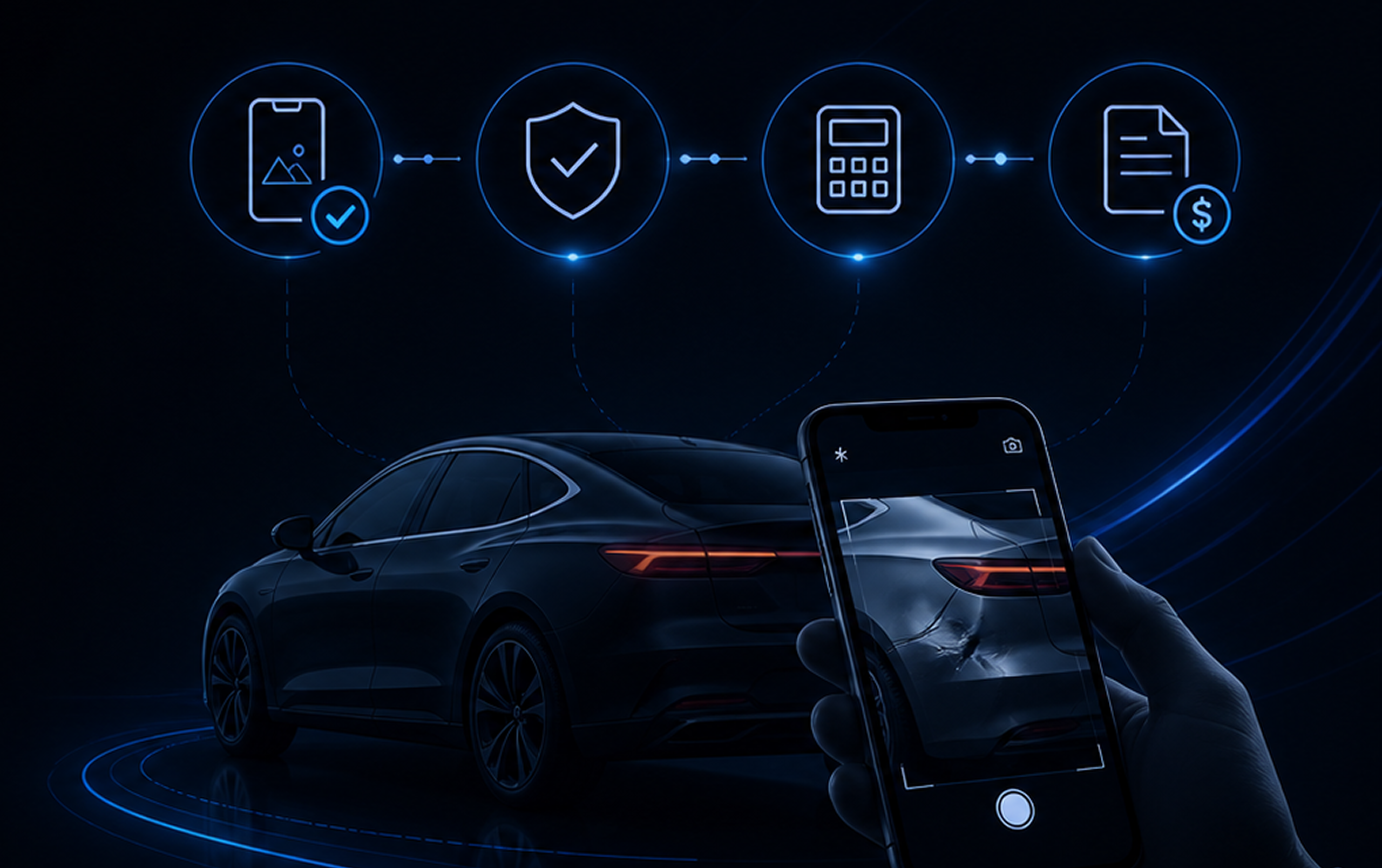
Every vehicle return is a decision point: recover the cost, absorb the loss, or let the workflow stall.
There is a moment that happens thousands of times a day across car-sharing platforms, rental fleets, and leasing operations worldwide.
For years, fleets have obsessed over "damage detection." But finding a scratch isn't the bottleneck — it's the manual process of applying your policy, calculating the liability, and actually billing the customer.
Most fleets already have return policies, pricing rules, and billing logic. The problem is that these rules still sit in PDFs, spreadsheets, and employee memory.
The Conversation the Industry Is Having
AI-powered damage detection is everywhere right now. Computer vision, automated photo analysis, inspection apps. But they solve only the first 10% of the problem.
Detecting that a scratch exists is not the same as recovering the cost of that scratch.
The gap between identifying a condition event and settling it financially — that is where the real revenue leakage lives. And for most fleets today, that gap is still filled entirely by human labor.
What It's Actually Costing You
For a fleet processing 500 returns per month, the combined cost of manual return processing — staff time, settlement delays, unsettled low-value returns, inconsistent catalogue application — typically runs between €200,000 and €500,000 per year.
Most operators have never measured it. The staff cost is buried in headcount. The revenue leakage is unquantified. The inconsistency is normalized. This is the blind spot.
The Opportunity
As fleets grow, the cost of manual return processing grows with them. Automated return processing doesn't. And when it costs nothing operationally to process a return, no condition event is too small to settle.
Every return becomes recoverable revenue.
Vehicle return automation is not yet a recognized software category. The operators who move in the next 12 to 24 months will build a structural cost and revenue advantage that compounds over time.
What Zero-Touch Car Returns Look Like
A vehicle returns. Photos are taken via mobile or existing user app.
AI agents apply your own internal pricing catalogue — your line items, your cost thresholds, your deductible logic — calculates the settlement, and delivers the invoice.
Autonomously. In minutes.
No manual lookup. No delay. No unsettled returns.
The blind spot is closing. The question is which fleets move first.
Spectiv automates the full vehicle return workflow: from condition capture through catalogue enforcement, cost calculation, and invoicing. With zero manual steps.